RAF Snaith opens
The airfield opened near Pollington as part of Bomber Command's wartime network. It was named RAF Snaith to avoid confusion with nearby RAF Pocklington.
RAF Snaith
RAF Snaith, near Pollington, opened in 1941 and became home to squadrons whose service and sacrifice are still honoured here today.

The airfield opened near Pollington as part of Bomber Command's wartime network. It was named RAF Snaith to avoid confusion with nearby RAF Pocklington.
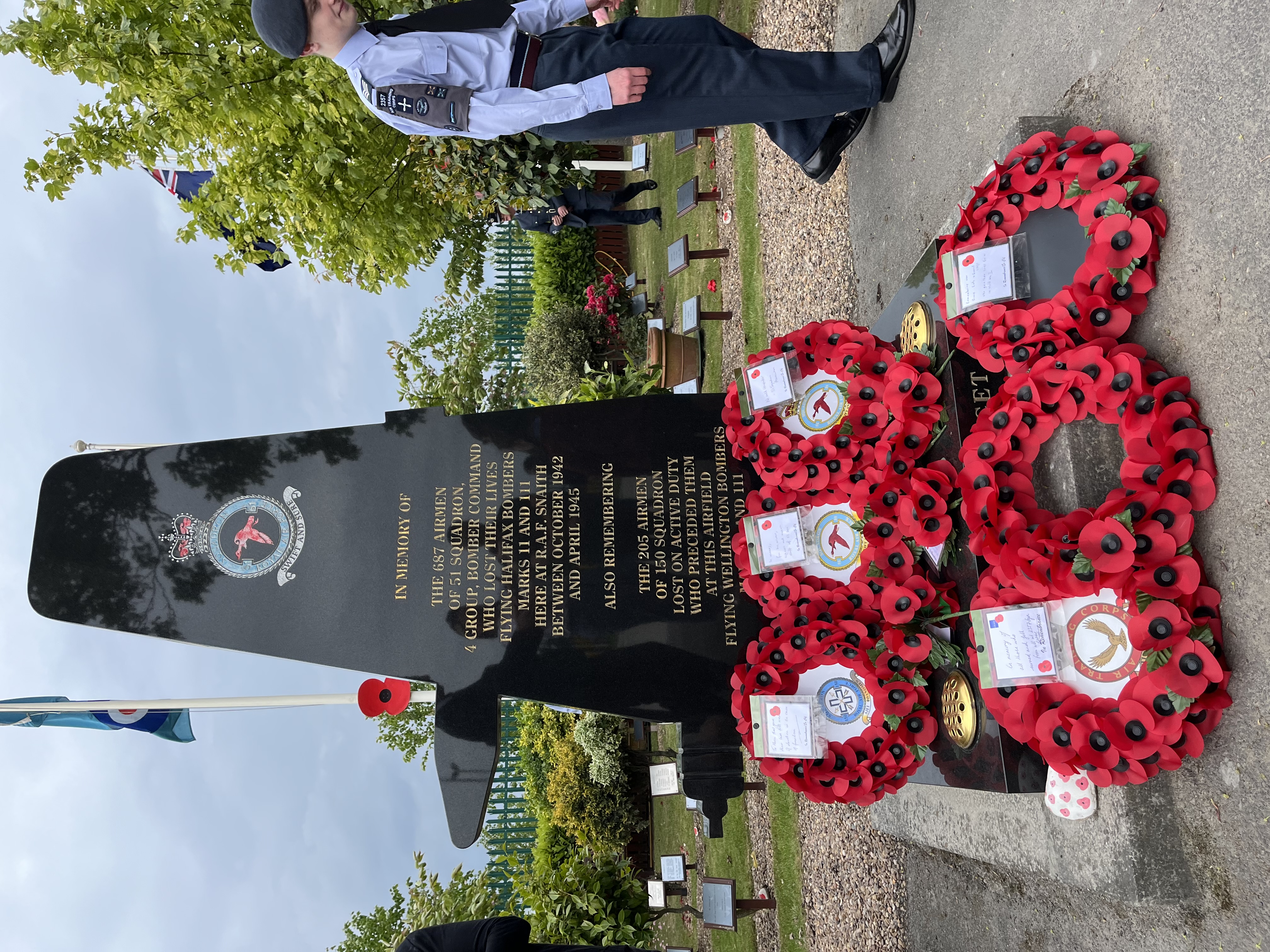
150 Squadron operated from RAF Snaith with Wellington bombers before moving on in October 1942. The garden remembers the 205 airmen of 150 Squadron lost on active duty.
51 Squadron operated Halifax bombers from RAF Snaith between October 1942 and April 1945. The memorial remembers 687 airmen of 51 Squadron who lost their lives.
The garden provides a peaceful place for reflection, remembrance services, family visits, and community care on the former RAF Snaith site. Material from the wartime runways was later used in the construction of the M62.
Why it matters
The garden helps people connect names, squadrons, aircraft, and local memory to a real landscape. It is both a memorial and an invitation to learn: a place for quiet gratitude, family research, and passing the story on.
Remembered here
The memorial stone gives the history a physical centre: a place for wreaths, services, family visits, and quiet moments of thanks.
Preview the plaque databaseFurther reading
The museum at Pollington tells the story of RAF Snaith, 150 Squadron, 51 Squadron, and the Women's Land Army.
Visit the museum websiteThe Royal Air Force's official 51 Squadron page gives an overview of the squadron's current role and history.
Visit the RAF pageSt Laurence Priory, Snaith hosts a local summary of RAF Snaith and its links with 150 Squadron and 51 Squadron.
Read the local history page